


What is Shopify Translate & Adapt?
Shopify Translate & Adapt is a powerful tool designed to help merchants expand their reach by easily translating and localizing their store content. This feature allows users to adapt their store’s language and content to meet the needs of diverse customer bases across different regions.
By using Translate & Adapt, retailers can easily handle translations for themes, product descriptions, image and video sources per language and checkout procedures, giving customers who are shopping in different languages a unified and customized experience.
What are the benefits of Shopify Translate & Adapt?
As mentioned above, Shopify Translate & Adapt presents a number of significant benefits for retailers seeking to expand internationally and enhance the shopping experience. These are the top three advantages:
- Expanded Market Reach: Access new markets and attract international customers by presenting your store in multiple languages, helping to drive global sales and grow your business beyond local borders.
- Seamless Localization: Effortlessly translate and customize your store’s content to meet the preferences of customers from different regions, ensuring a more relevant and engaging shopping experience.
- Enhanced Customer Experience: Provide a personalized shopping journey by displaying product information, checkout processes, and other store elements in the customer’s preferred language, increasing satisfaction and reducing friction.
How to Set Up Shopify Translate & Adapt and Use It in GemPages Editor V7?
Step 1: Add language
Choose the language you want to translate for your site by clicking on Add language.
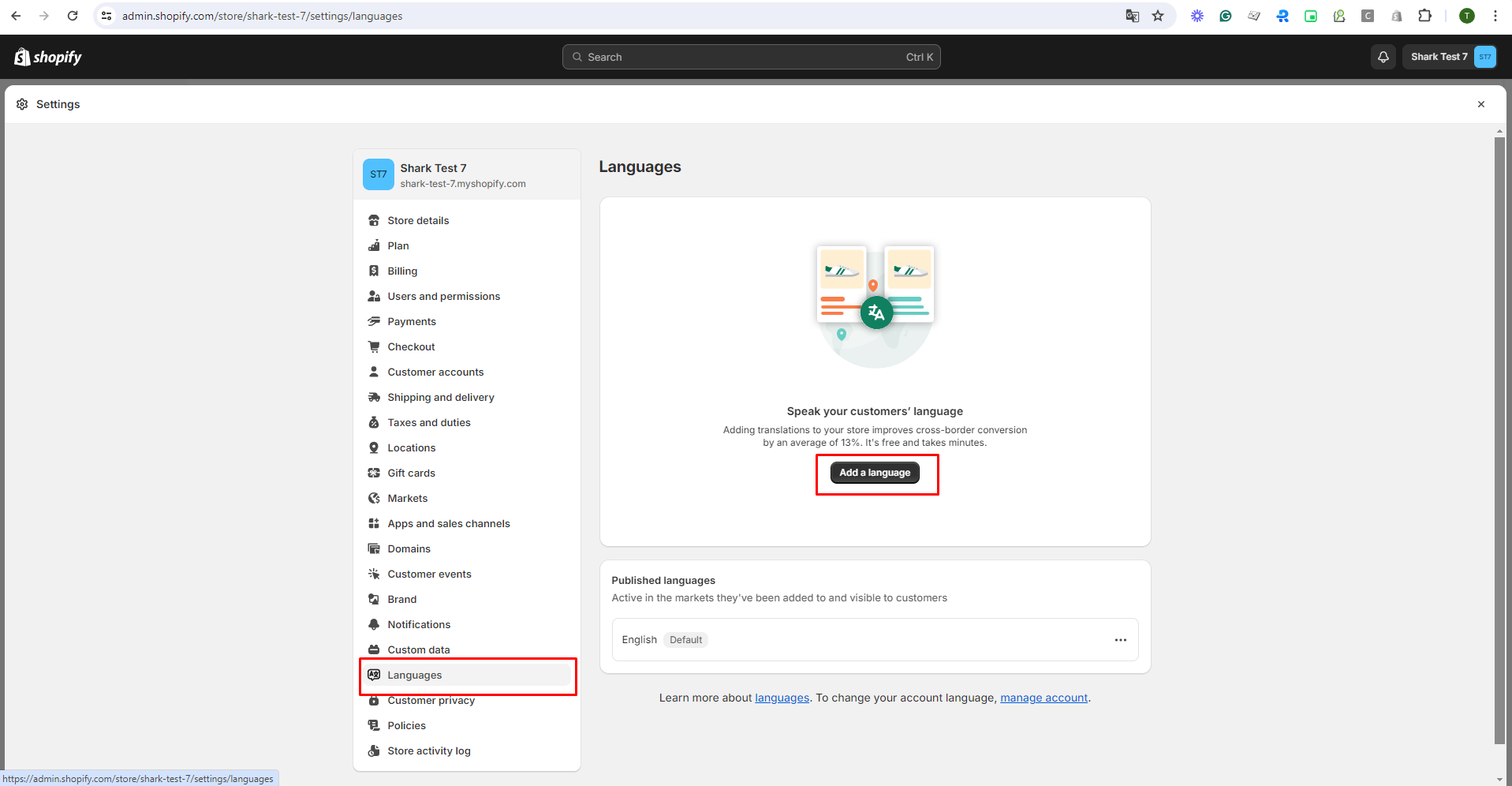
Step 2: Access Shopify Translate and Adapt
You will have 2 options to access the app:
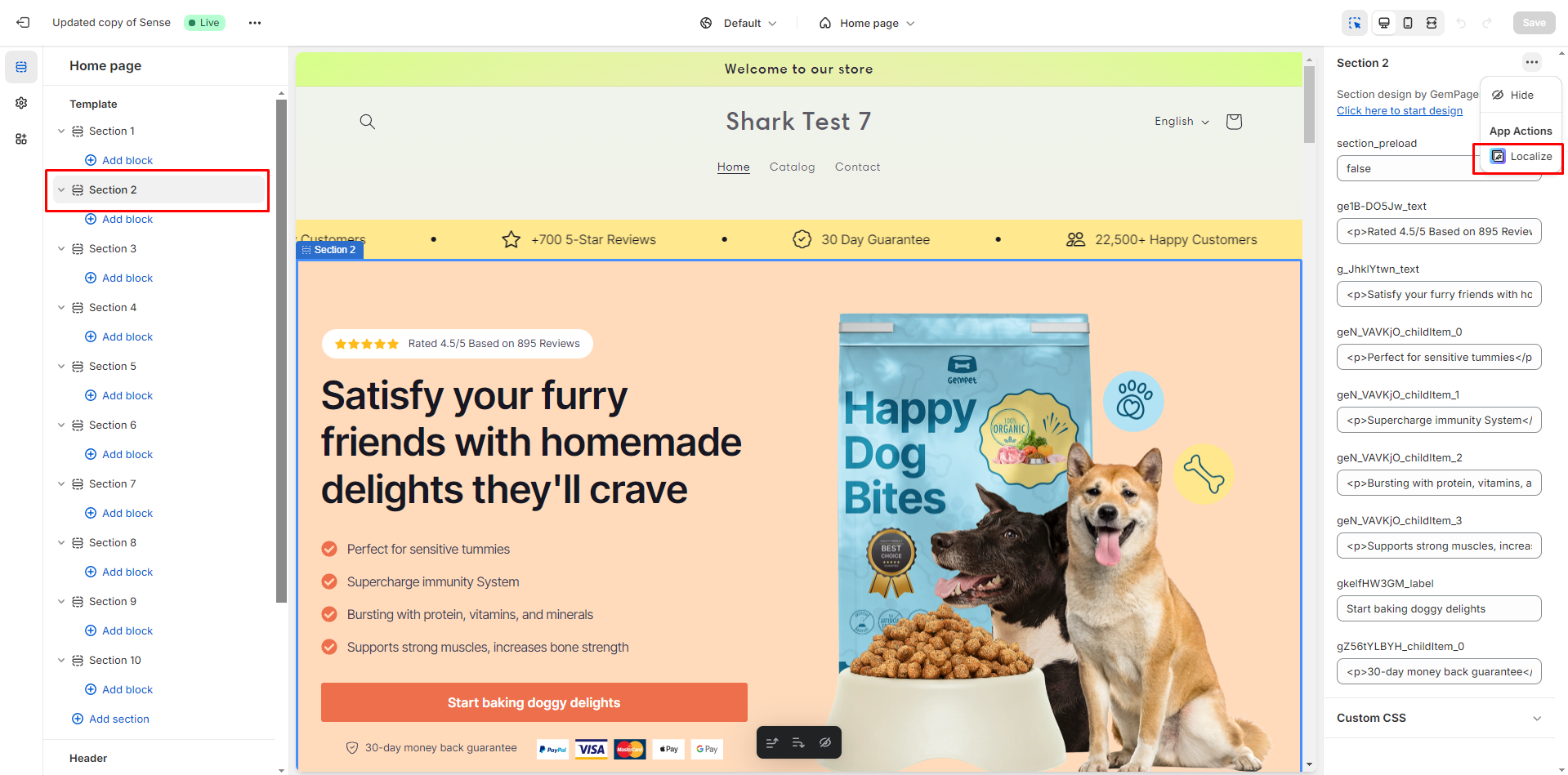
Option 1: From Shopify Theme settings, open a GemPages Template that you want to translate. Choose a section and click “Localize” as the picture below.
Option 2: Open the GemPages page that you want to translate. Click the three-dot menu (⋯) on the page. Select Translate & Adapt.
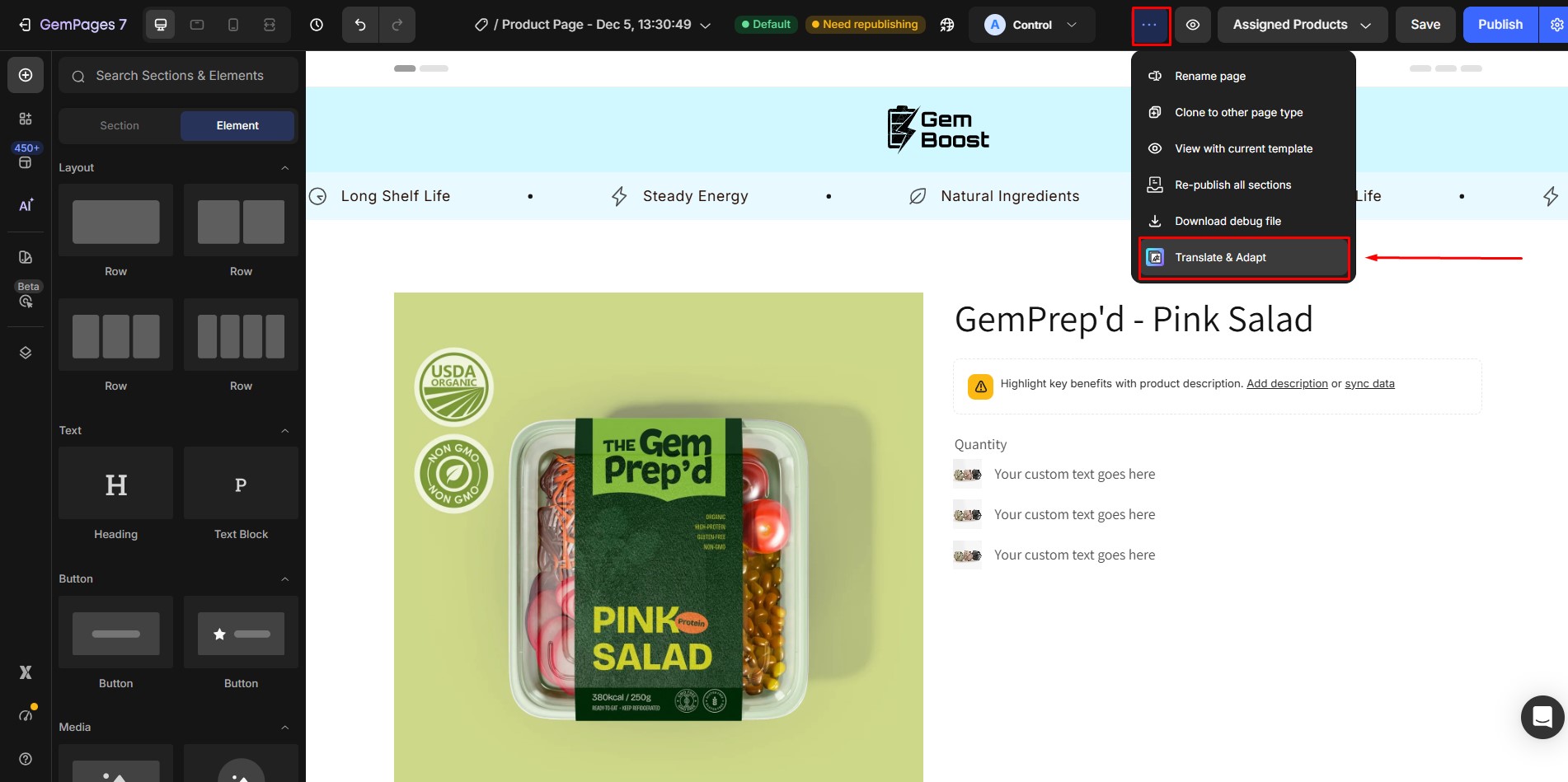
No matter which option you choose, the corresponding page will open in the Shopify Translate & Adapt app, where you can manage translations for that page’s content.
Step 3: Translate the content
When using Shopify Translate & Adapt with GemPages, you can translate most common content types used on your page.
GemPages supports translating text-based content such as headings, paragraphs, button labels, product messages, form placeholders, tabs, accordion titles, and other on-page text.
In addition to text, GemPages also supports translating image-related content, including image alt text, image titles, and updating image sources for different languages when needed.
You can also adapt media content, such as changing image backgrounds, video sources (YouTube, Vimeo, or CDN videos), and other visual elements to match different markets or languages.
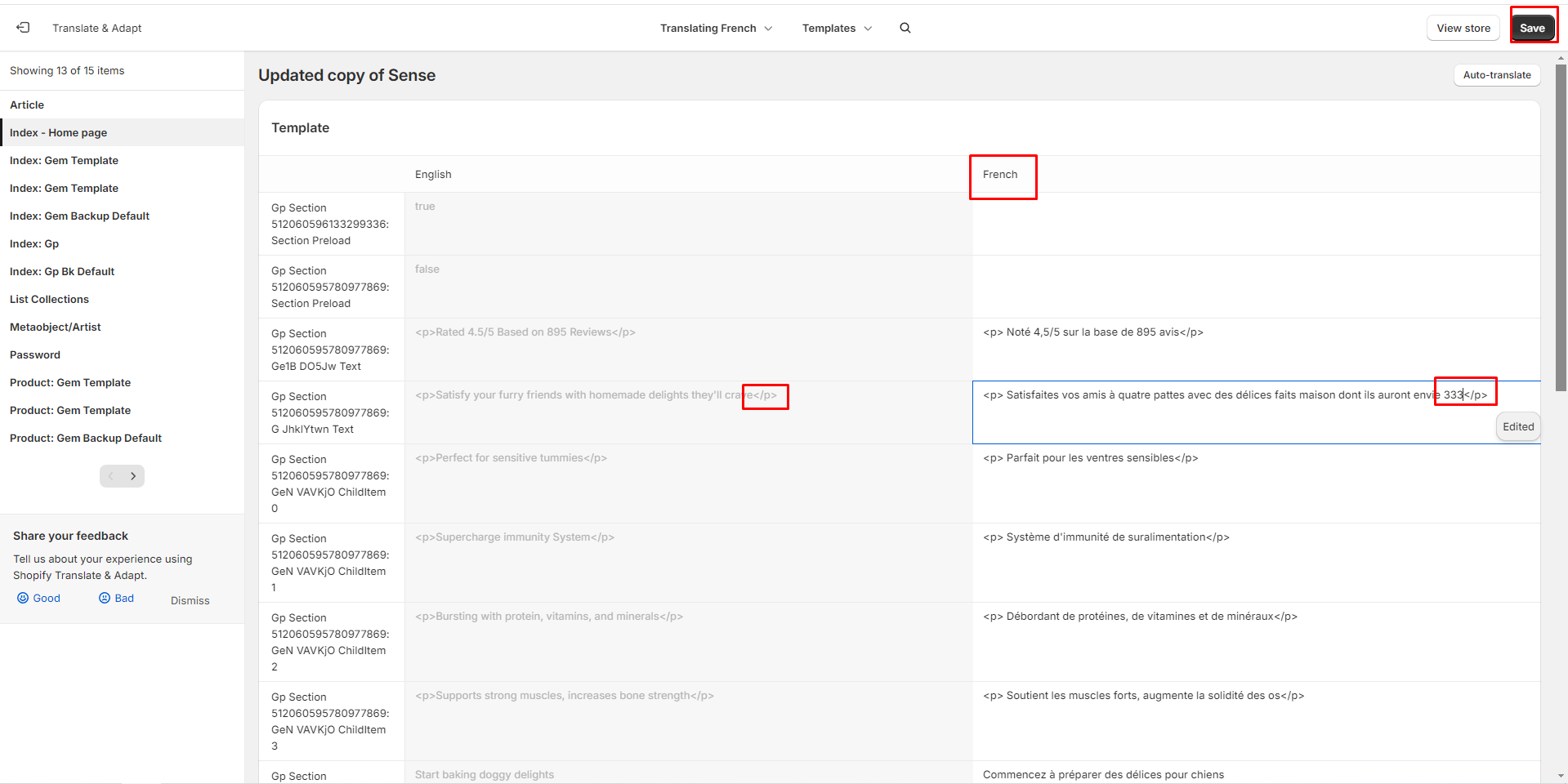
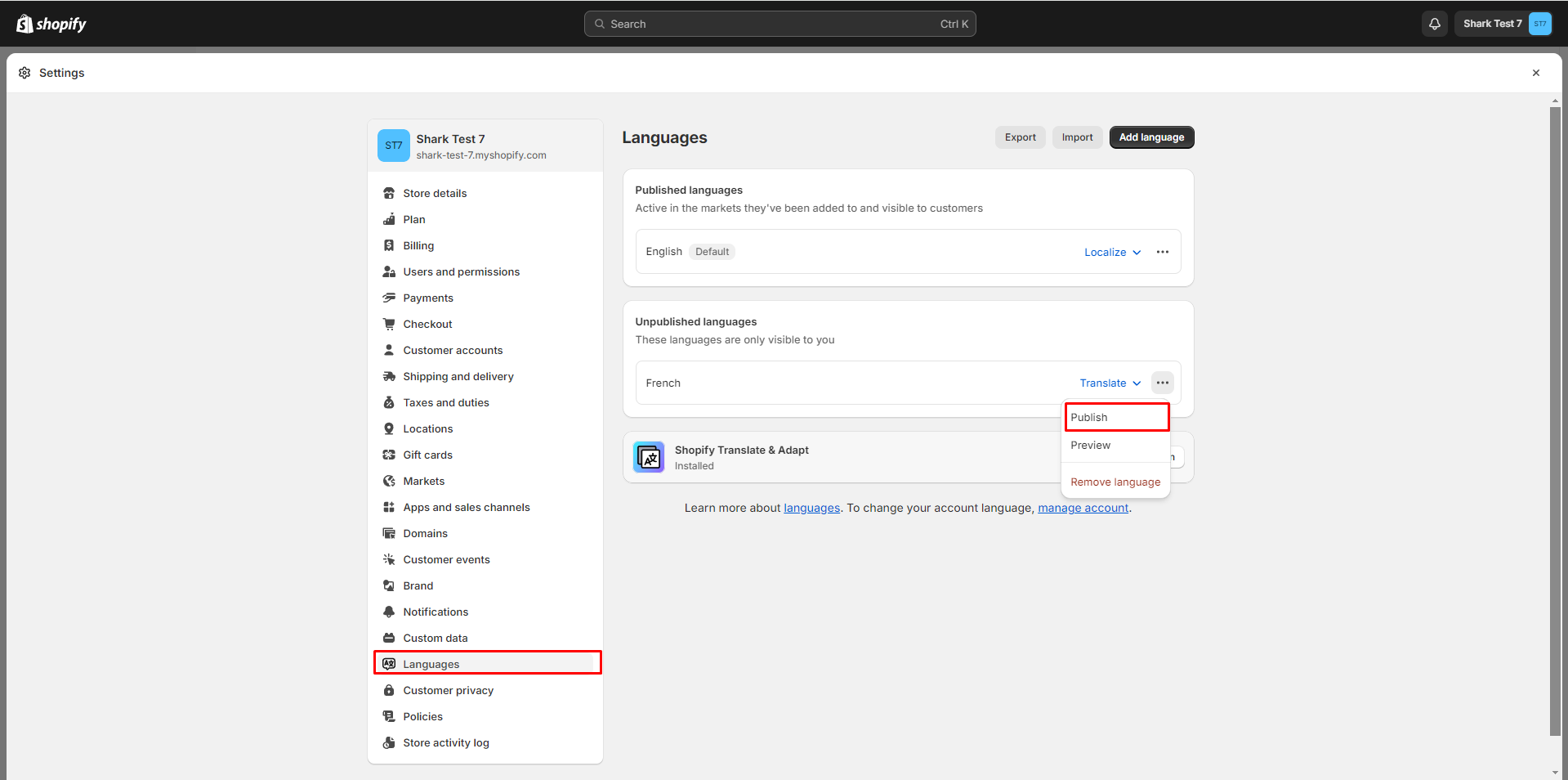
Step 4: Publish the new language
Publish the new language by clicking on “Publish”, as the picture below.
Step 5: Add the language you want to translate to the market section.
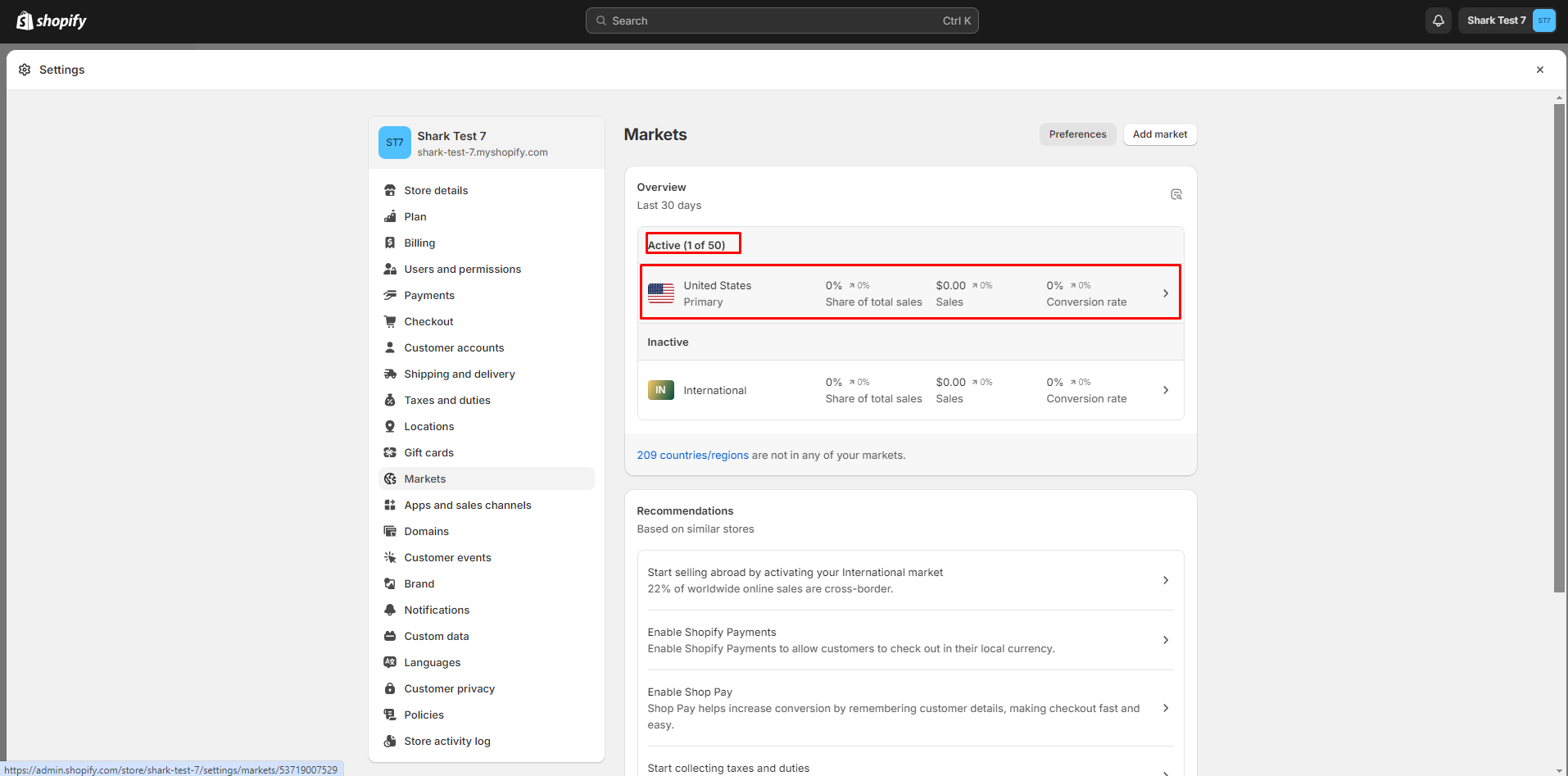
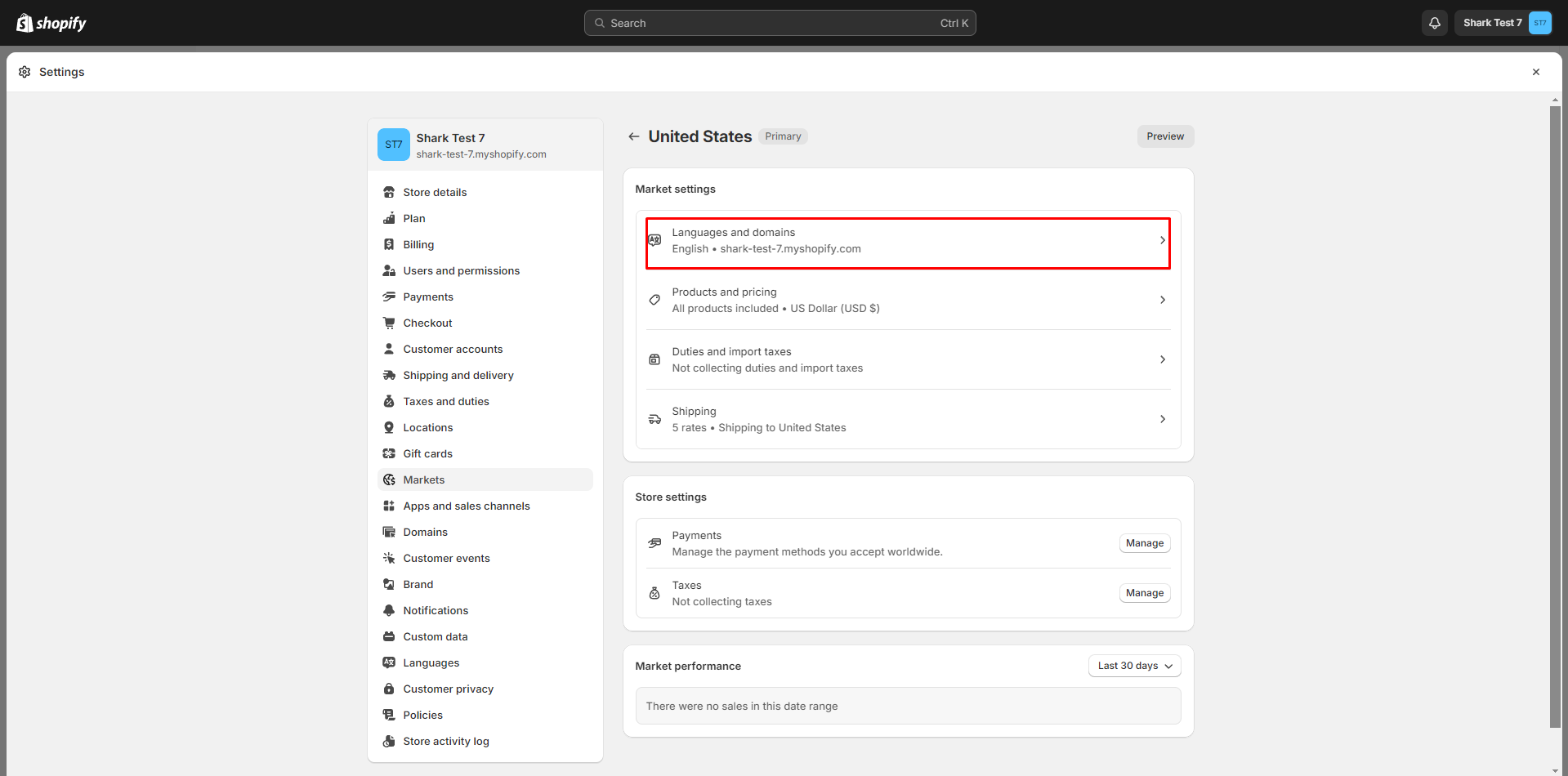
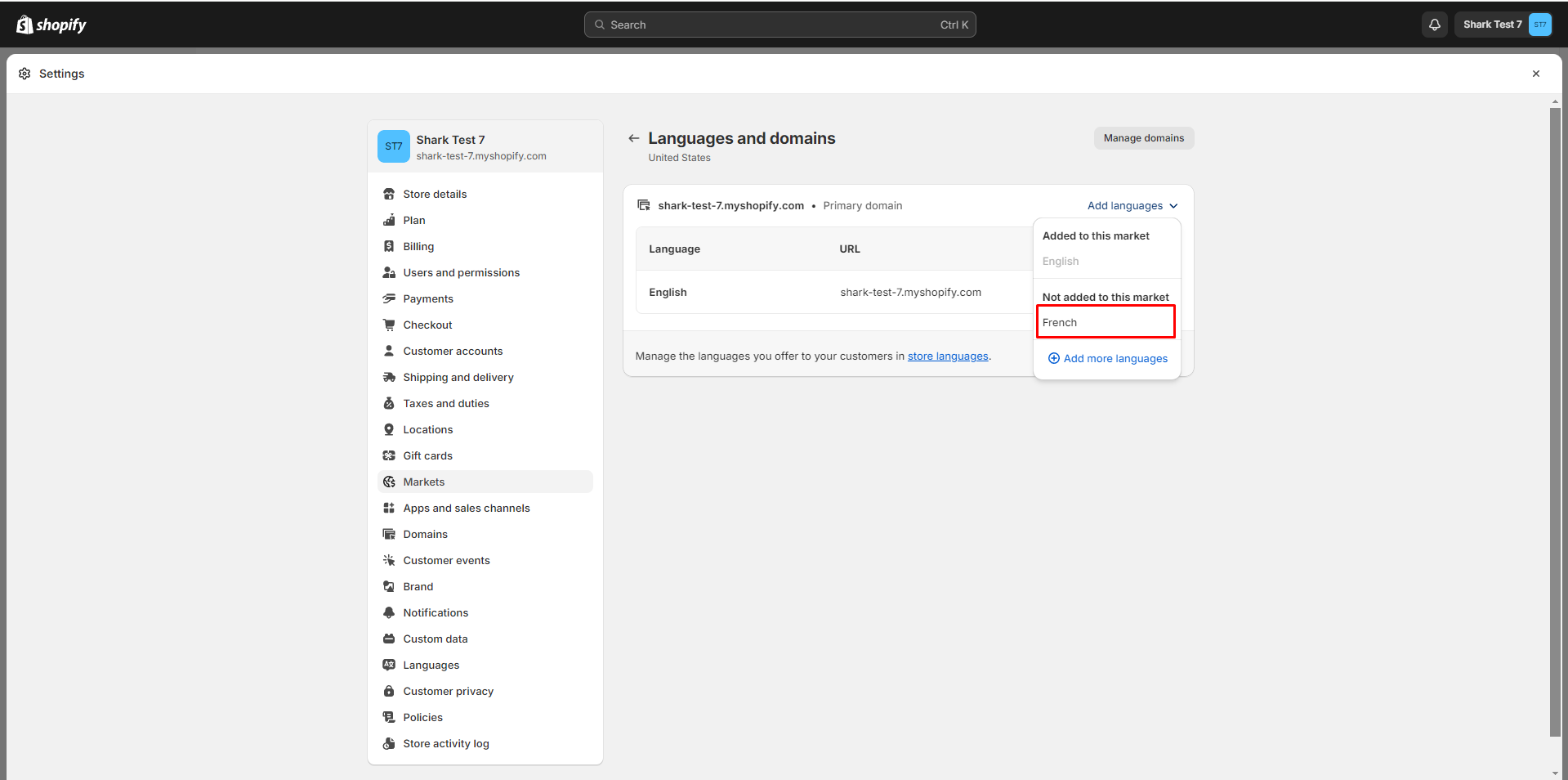
Step 6: Active the Language Selector
Active the Language Selector on the Header or Footer while customizing your theme. Hit “Save” when finished.
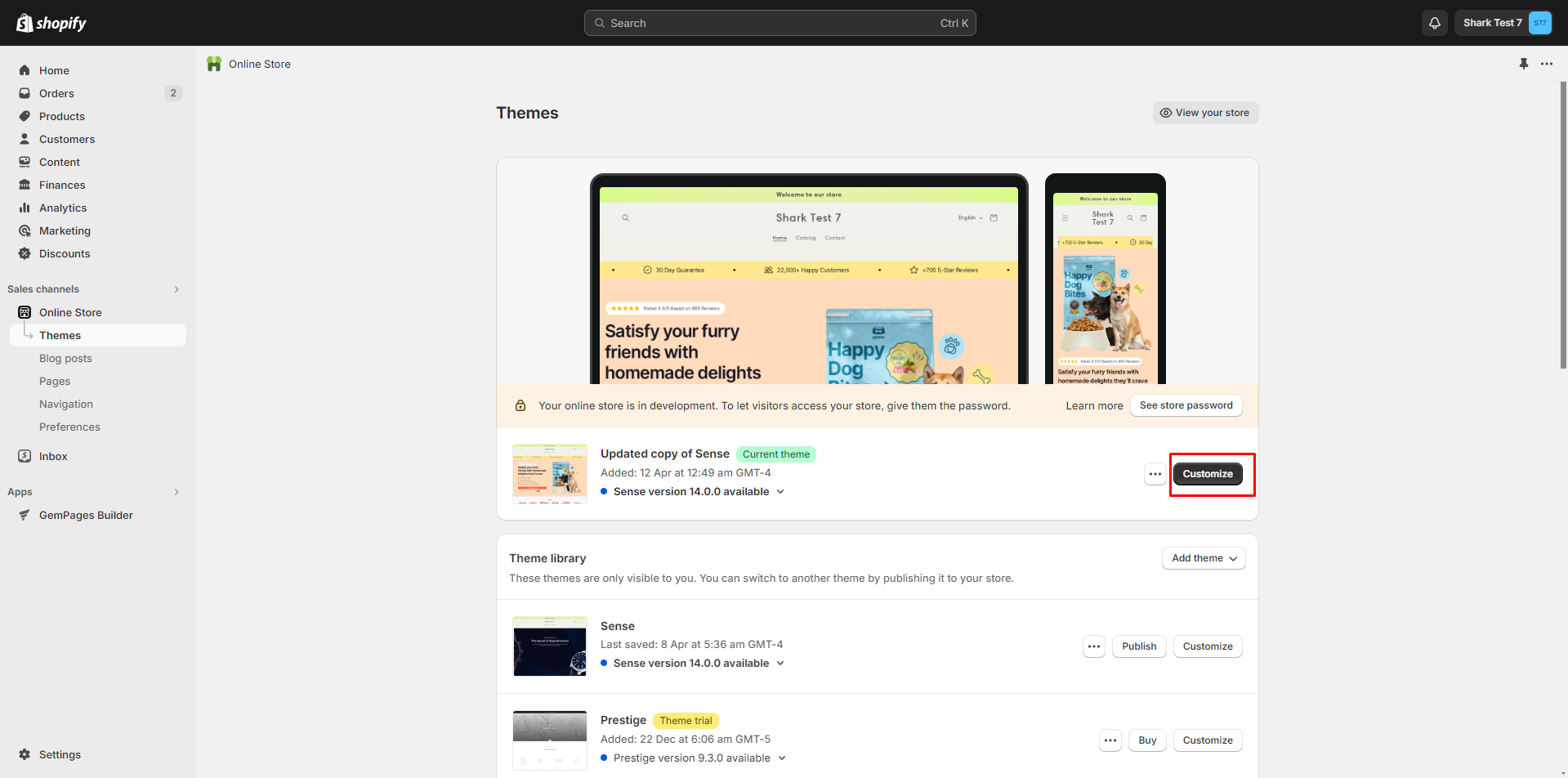
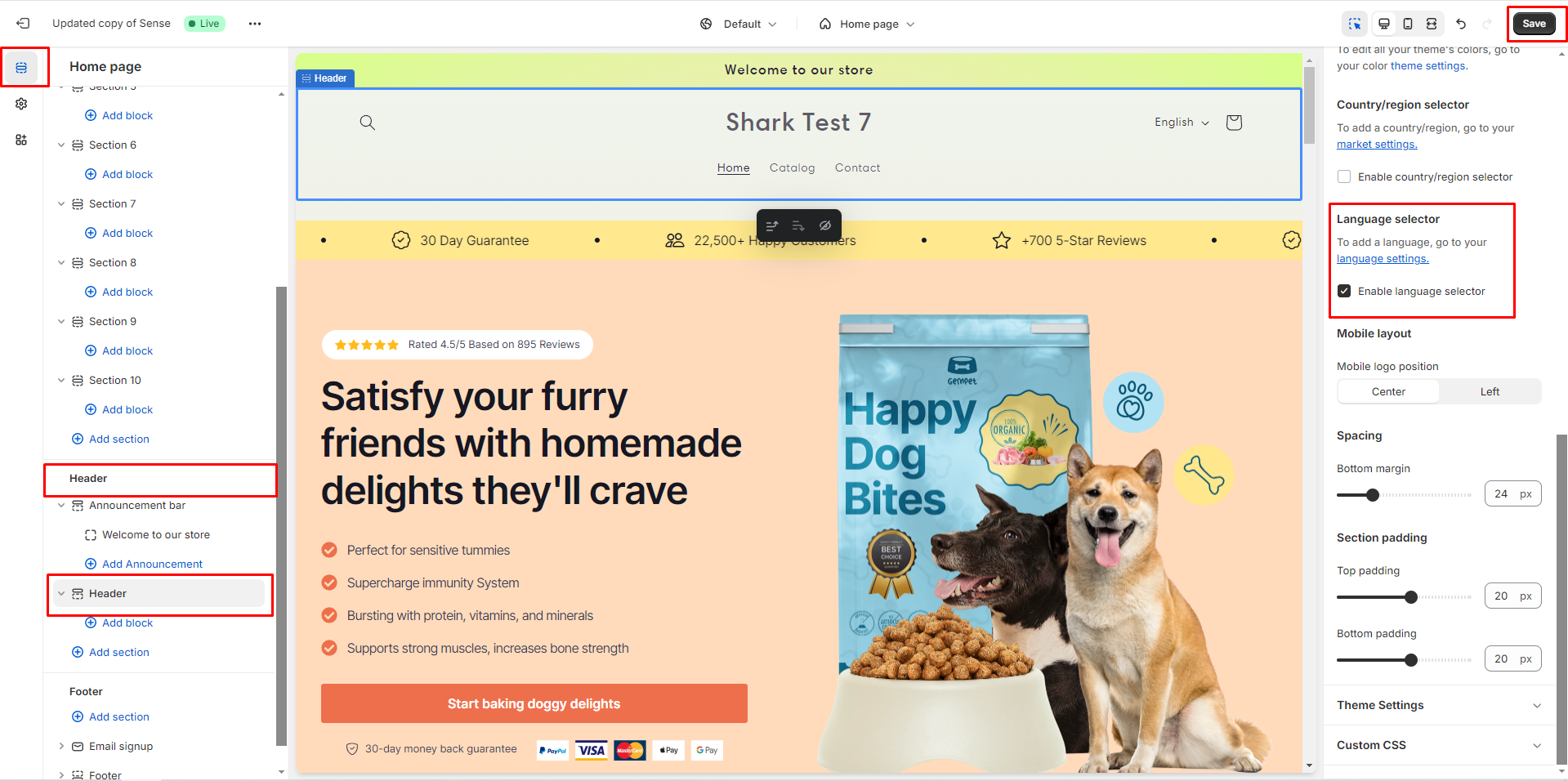
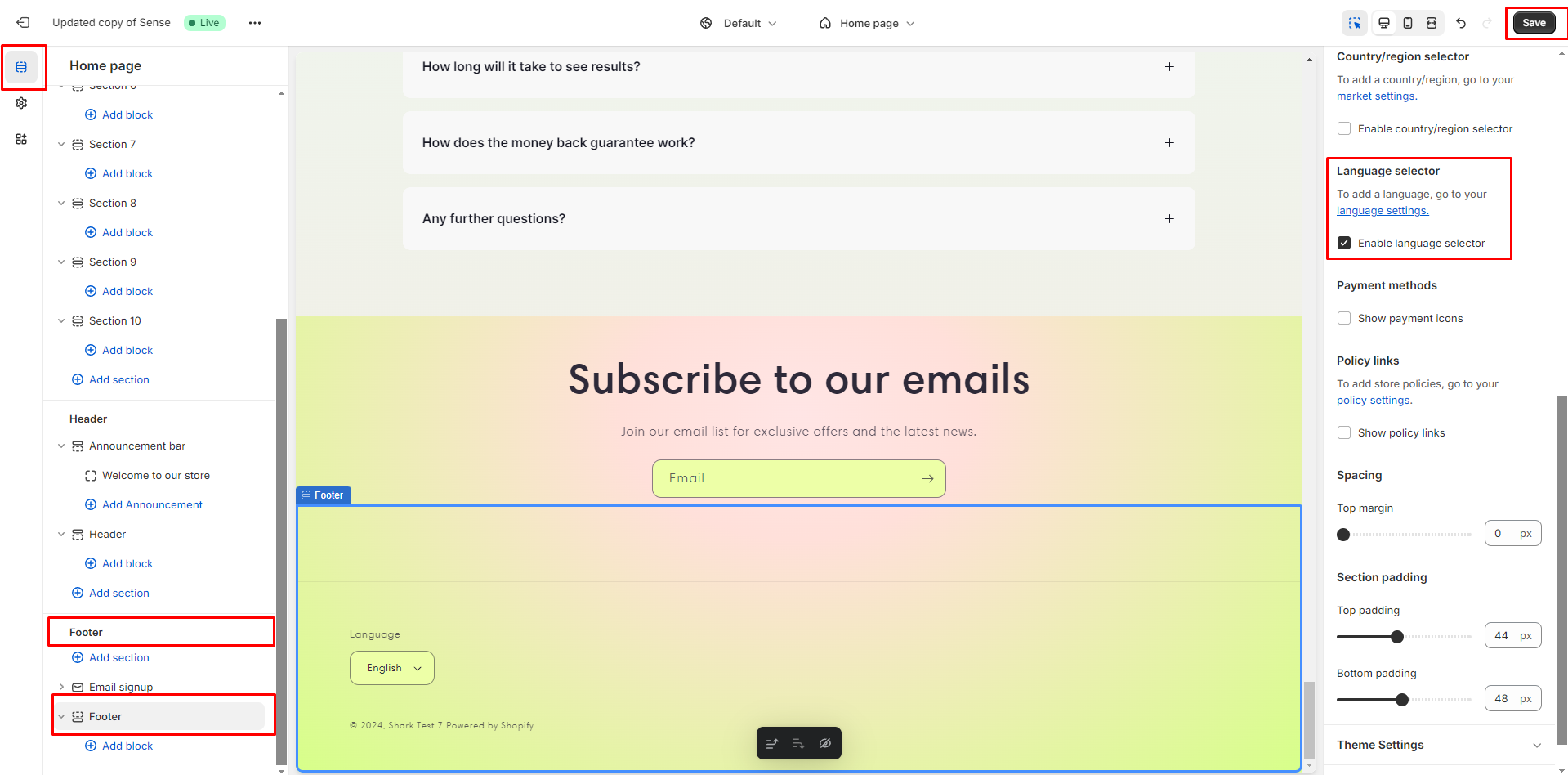
Now you can view the result on the live page.
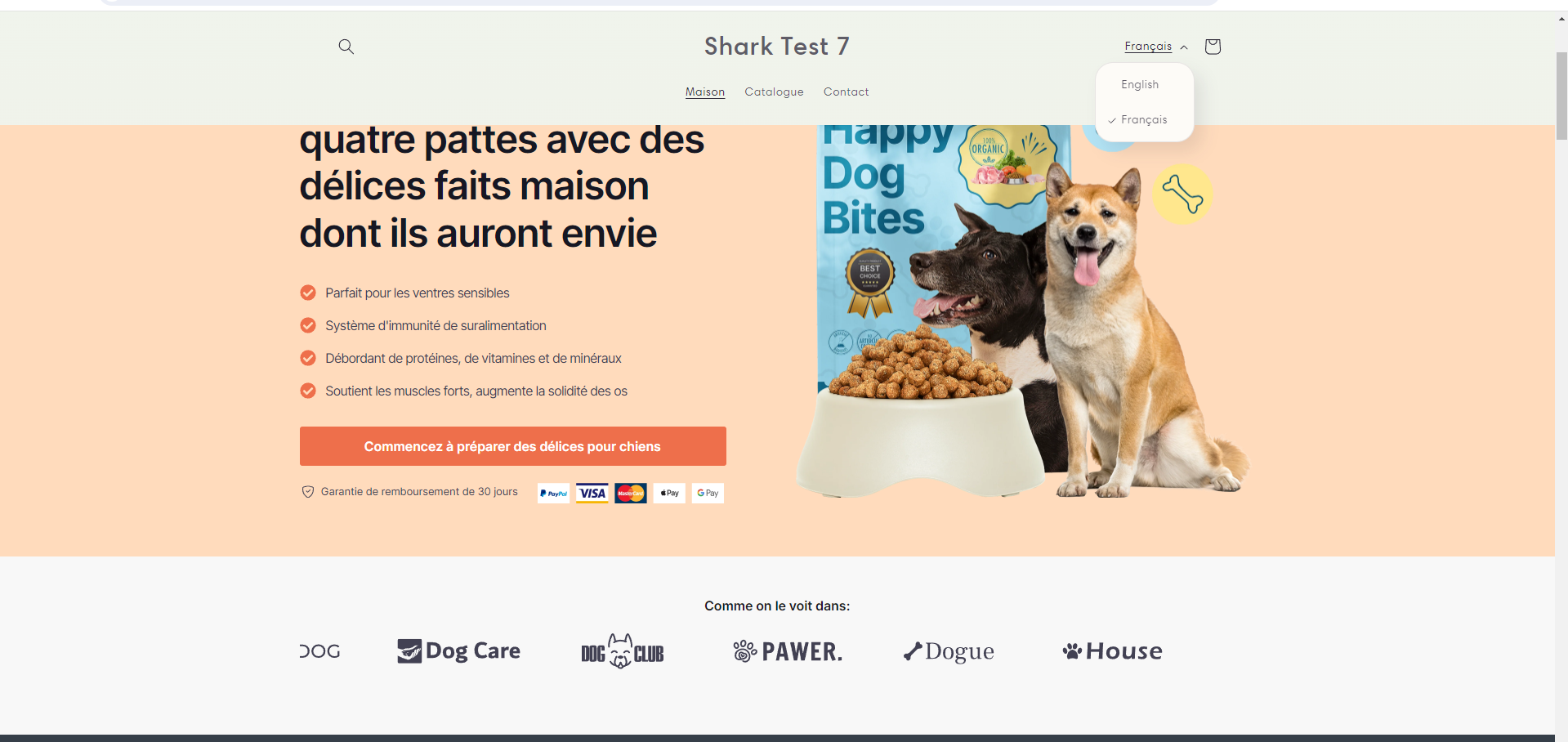
That’s our guide for setting up Shopify Translate & Adapt and using it on your Shopify store. For issues related to app settings or widget customization, please reach out to the Shopify Translate & Adapt’s support team.
Frequently Asked Questions
1. Translate & Adapt is not working — it doesn’t translate English
This usually happens if you haven’t selected Auto Translate or manually added English translations yet. Go to the Translate & Adapt app and make sure English is translated via automatic or manual input.
2. Why are some sections of my page not translated?
Some custom content built with third-party apps or custom code might not be automatically detected. You’ll need to manually translate those sections within the app or ensure they’re included in your theme’s translatable content.
3. Can I translate dynamic product content in GemPages?
Yes, but dynamic content like product names or metafields may require you to ensure translations are synced properly from your Shopify product backend before they reflect on your GemPages design.
4. I updated my page, but the change doesn’t appear in other languages immediately. Is that normal?
5. Can I translate URL slugs using Shopify Translate & Adapt?
No. GemPages currently does not support translating URL slugs through Shopify Translate & Adapt.


Thank you for your comments